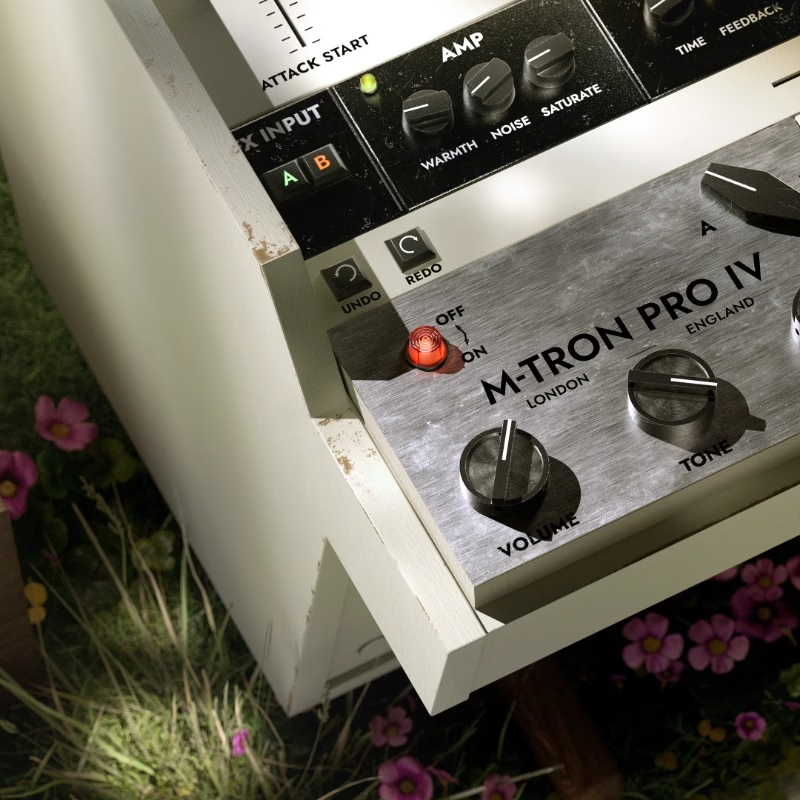
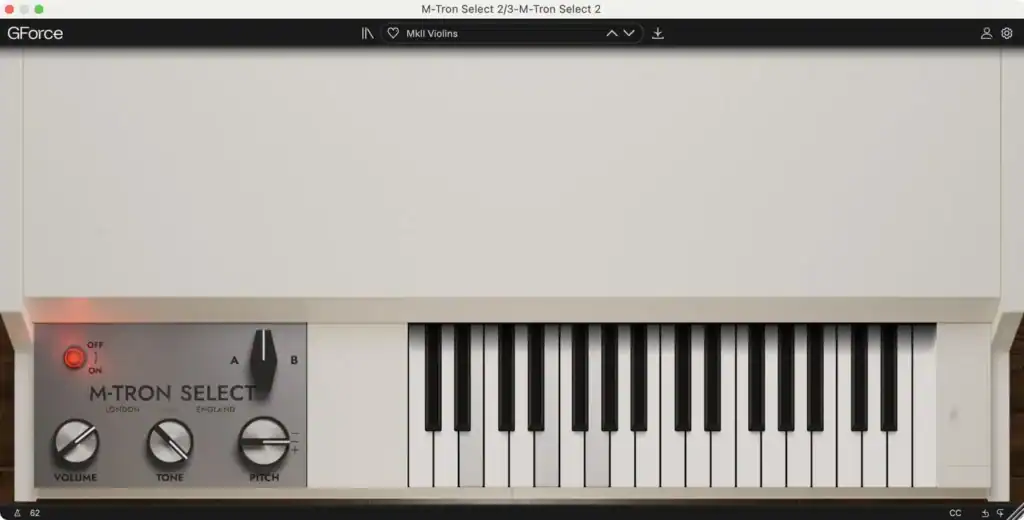
GForce has released M-Tron Select 2, a free version of its Mellotron plugin, available at no cost until 1 December 2026. It includes six core tapes: MkII Violins, MkII Flute, Male Choir, GC3 Brass, Vibes and MkII Piano.
The Mellotron plays back recordings from tape. Each key has its own strip of tape holding about eight seconds of real instrument recordings, such as flutes, strings or a choir. Over the years, the sound moved from tape to samplers and then to plugins. GForce released the original M-Tron in 2001, and its current version, M-Tron Pro IV, contains nearly 200 tape banks.
In this article, I’ll recreate some of my favourite uses of the Mellotron, from King Crimson to Frank Ocean. As well as the sound itself, I’ll go through how I processed each part to sit in a mix.
King Crimson, Epitaph
The Mellotron first found its way onto rock records in the 1960s. The Beatles famously used it on Strawberry Fields Forever, but my favourite early example is the strings on King Crimson’s In the Court of the Crimson King, played by Ian McDonald on a Mellotron MkII.
On the track Epitaph, McDonald recorded two Mellotron parts and moved their levels against each other in the mix, which gives the strings a sense of movement. I recreated the sound in Select 2 using the MkII Violins tape. I used two instances of Select 2 playing the same MIDI, panned hard left and right, with the second instance delayed by 8 ms. This creates a wide stereo sound, as the Mellotron is a mono instrument.
Both of the Select 2 instances also have some EQ to make the sound brighter. I added a big high shelf boost from 5 kHz and a cut at 750 Hz to remove some of the mid-range. Below you can compare the dry Mellotron tape with the doubled and EQed version:
Epitaph Dry
Epitaph Doubled
Oasis, Wonderwall
The Mellotron fell out of fashion in the 1980s, kept alive by a few holdouts like Tangerine Dream. Then in the 1990s, it suddenly became popular again as bands went looking for a retro sound. One of the best-known examples is Oasis’s Wonderwall. The cello part is actually a Mellotron, played by Bonehead, although the music video shows a real cellist.
I managed to recreate this sound using the Cello Basic preset in M-Tron Pro IV. I used two tracks for the low and high notes, with the high track about 9 dB quieter. The cello tape sounds quite dark, so I added a high shelf boost to both tracks using Ableton’s EQ Eight. On the low track, I also cut some low end so it sits better with the bass.
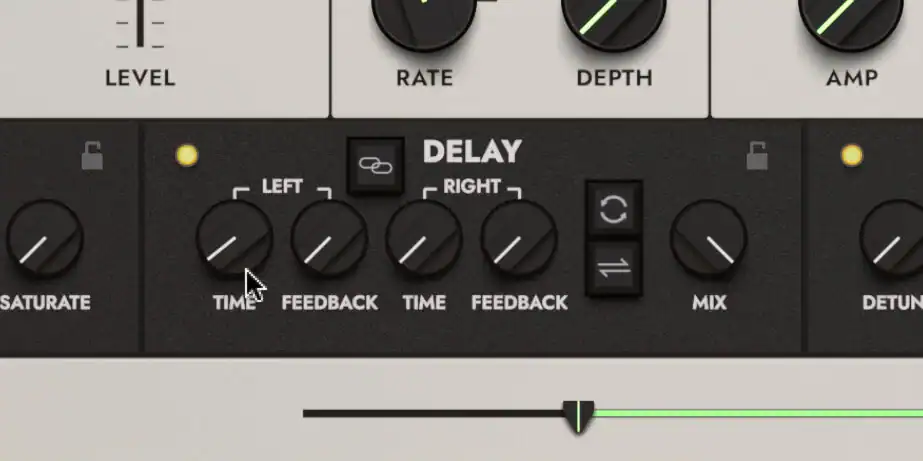
The Wonderwall cello is also a wide stereo sound, but rather than double-tracking the part, it was likely stereoized by applying a delay to one of the left or right channels. You can set this effect up easily in M-Tron Pro IV using the built-in delay effect. Set the left channel delay to something small (I used 14 ms) and the right channel delay to Off, with feedback at 0 and mix to 100%. Instant stereo effect!
Wonderwall Dry
Wonderwall Processed
Radiohead, Airbag
Another 90s example is Radiohead’s Airbag, the opening track from OK Computer. Jonny Greenwood played an M400 cello part that doubles the guitar riff. The guitar and drums are both distorted, so my version is a close approximation; the guitar adds a grit that the Mellotron can’t.
I used the same Cello Basic preset as in Wonderwall. I used the same stereo delay doubling trick, this time with the left channel set to 30 ms.
Airbag Dry
Airbag Processed
Radiohead, Exit Music (For a Film)
Exit Music (For a Film) was written for the film Romeo + Juliet. Greenwood’s Mellotron choir comes in during the second half of the song.
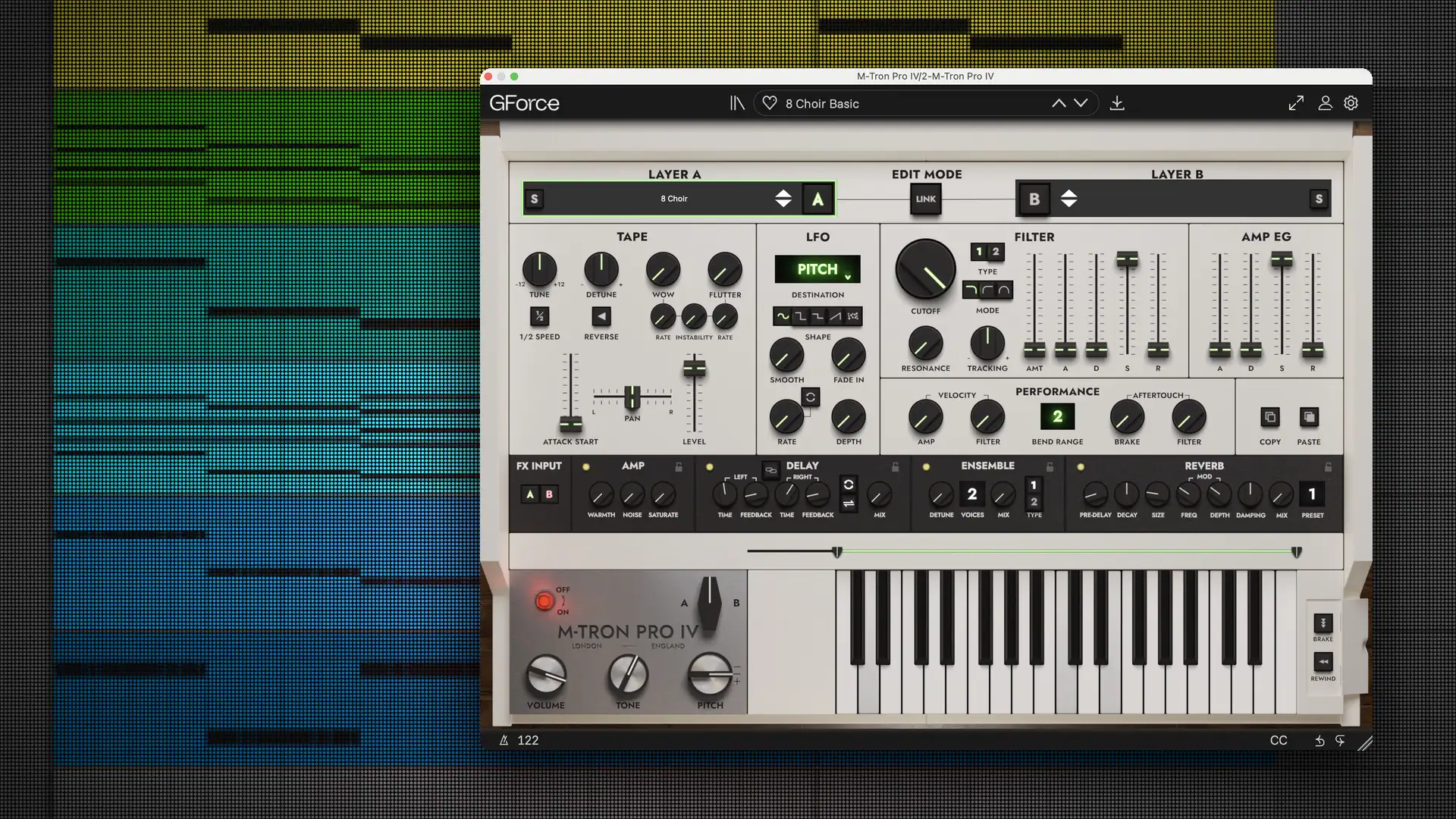
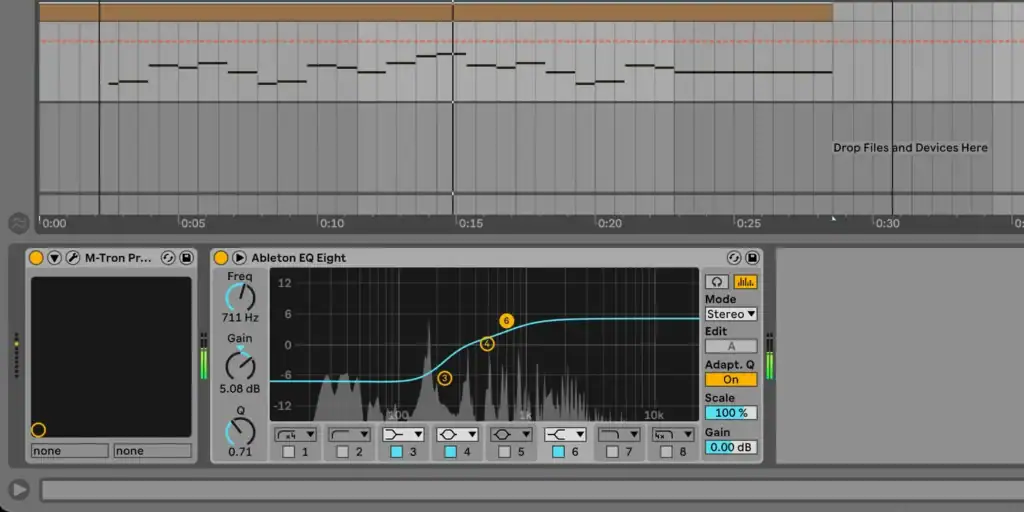
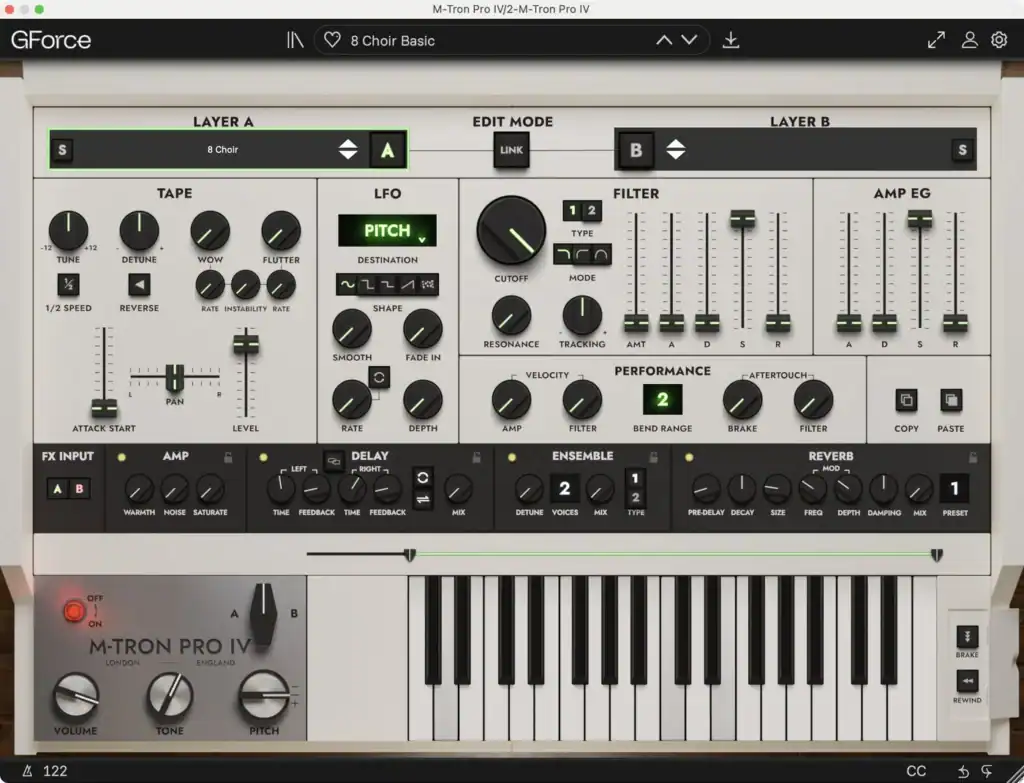
I used the 8 Choir Basic preset from Pro IV’s Streetly Tapes Vol 1 bank, which features four male and four female voices. The original sounds darker, so I turned M
Tron’s Tone control down to 0.6. On the EQ, I boosted 550 Hz by 9 dB and cut the highs with a high shelf from 2 kHz.
The choir in the original is very wide. A delay double does most of the work, so I only needed a small amount of reverb: 25% wet with a 1.5-second decay. Select 2 only includes a male choir, so it’ll get you close, but not exact.
Exit Music Dry
Exit Music Processed
Opeth, Windowpane
The Mellotron has even made its way into death metal. Windowpane opens Opeth’s 2003 album Damnation, co-produced by Steven Wilson. Mikael Åkerfeldt wanted Damnation to be a Mellotron record with a King Crimson-style sound.
The funny thing is, there’s no real Mellotron on it. In a 2023 interview with MusicRadar, Åkerfeldt said the parts were MIDI sounds. Exactly what was used isn’t known.
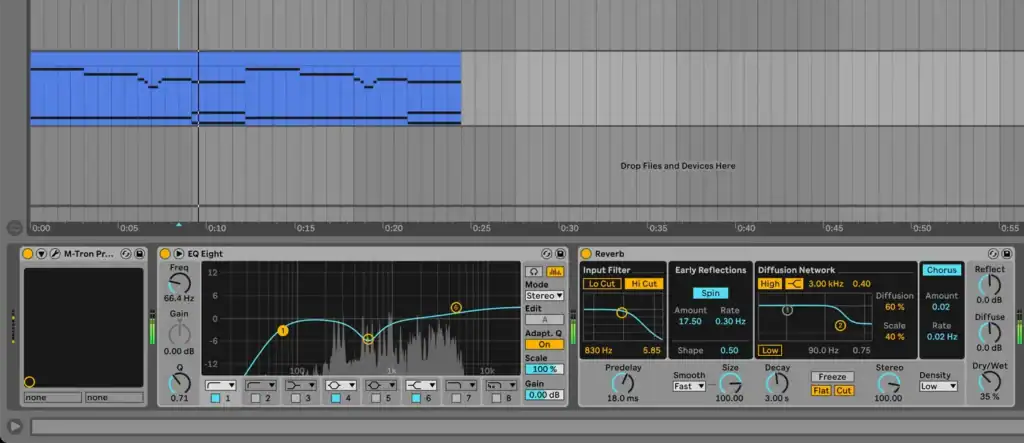
To recreate the sound, you can use the MkII Violins Basic preset. For my recreated clip, I cut 6 dB at 560 Hz to take out some boxiness and added a 3 dB high shelf boost from 5 kHz. There’s no delay double here; the reverb provides the width instead.
Windowpane Dry
Windowpane Wet
Red Hot Chili Peppers, Snow (Hey Oh)
Mellotron flutes can be heard prominently in Snow (Hey Oh), from Red Hot Chili Peppers’ 2006 album Stadium Arcadium. The part was played by John Frusciante on his own Mellotron, said to be a Mk VI.
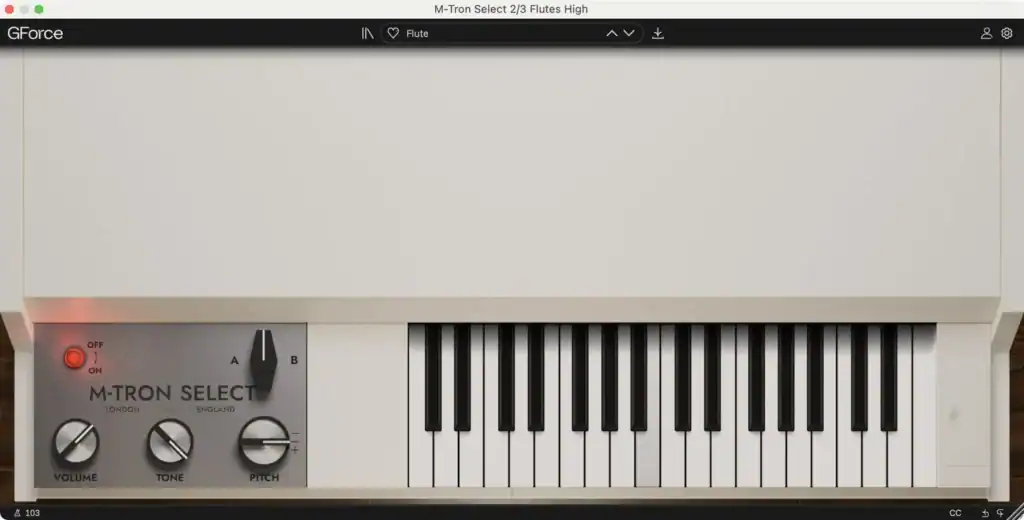
I recreated it in Select 2 using the Flute preset across two tracks, one for the high notes and one for the low notes. Again, the mixed version has tons of brightness and stereo width, so I used the delay doubling trick along with some aggressive treble boosts with EQ. Here are the dry flutes, followed by the processed version:
Snow Dry
Snow Processed
Frank Ocean, Pyramids
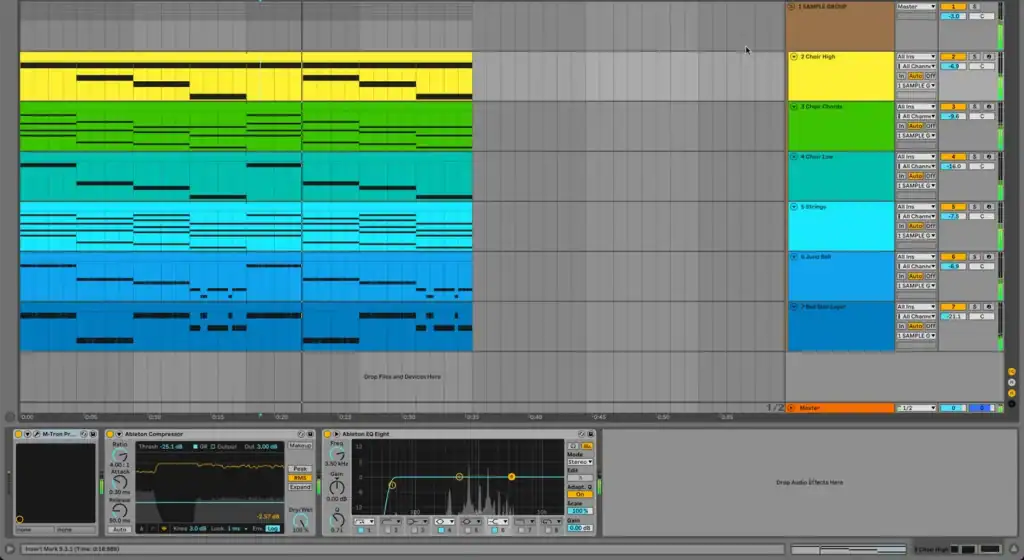
Frank Ocean’s Pyramids is the one song here that was made with M-Tron itself. Producer Malay told Gearspace that he built the opening sample of the ten-minute epic from “some choir sounds from the Mtron”, layered with a Roland Juno-106 bell, so recreating it meant going back to the same plugin.
I used one track per layer: Choir 2 and Black Sabbath Choir for the high choir, Choir 1 for the chords, 15 Choir for the low choir, and MkII Violins for the strings.
The processing here is the opposite of the other examples, with the EQ mostly cutting rather than boosting, and the sound kept completely mono. The result is darker and narrower than the rest. Below you can hear the high choir on its own, the full sample group, and the sample in the full mix:
Pyramids Choir High
Pyramids Sample Group
Pyramids Full Mix
M-Tron Select 2 is free until 1 December 2026. You can recreate Epitaph, Windowpane and Snow (Hey Oh) entirely with Select 2, while the rest need M-Tron Pro IV.
By sound designer Reverb Machine
Big thanks to Reverb Machine. You can hear the Mellotron’s character in every song here, but the details make the difference: the EQ moves, the doubled parts, the reverb choices and the layering.
Every example in this article was made with M-Tron Pro IV and M-Tron Select. Load a choir, a string section or a flute, try one of these tricks, and see where it takes you. Some of the best Mellotron parts ever recorded started as someone pressing a key just to see what it did.
Find more of Reverb Machine’s sound breakdowns at reverbmachine.com.