January 24, 2026
by GForce Software
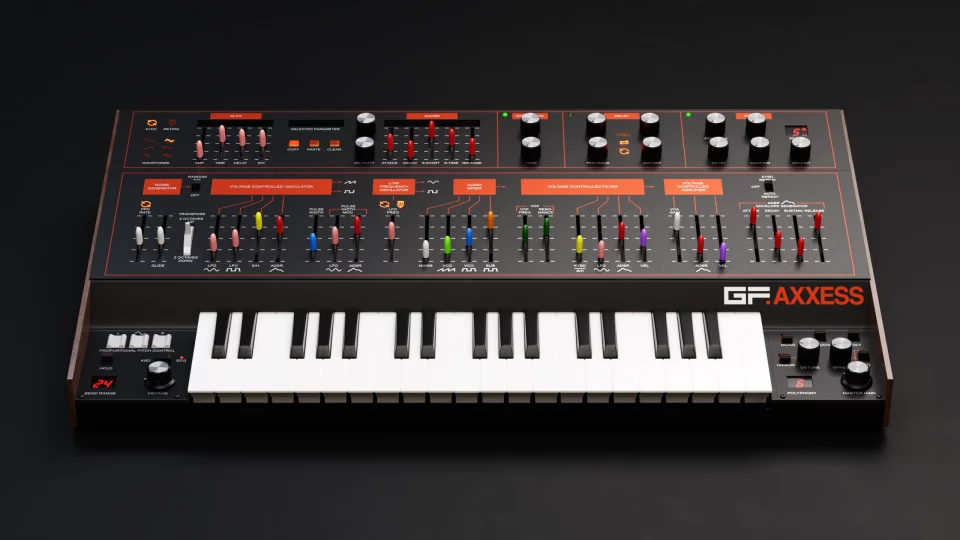
Axxess is based on the ARP© Axxe, a compact, budget version of the more famous ARP Odyssey. These budget synths often ended up in the hands of artists making rawer, more experimental music, and the plugin version captures the original’s character with additional features like polyphony and built-in effects such as distortion, delay, and reverb, making it great for noisy, left-field sounds.
In this article, I’ll walk you through how I made a lo-fi, trip-hop track using only Axxess. We’ll start with a handful of factory sounds, then tweak and layer them together into a woozy, Boards of Canada–style groove.
Lo-Fi Chords
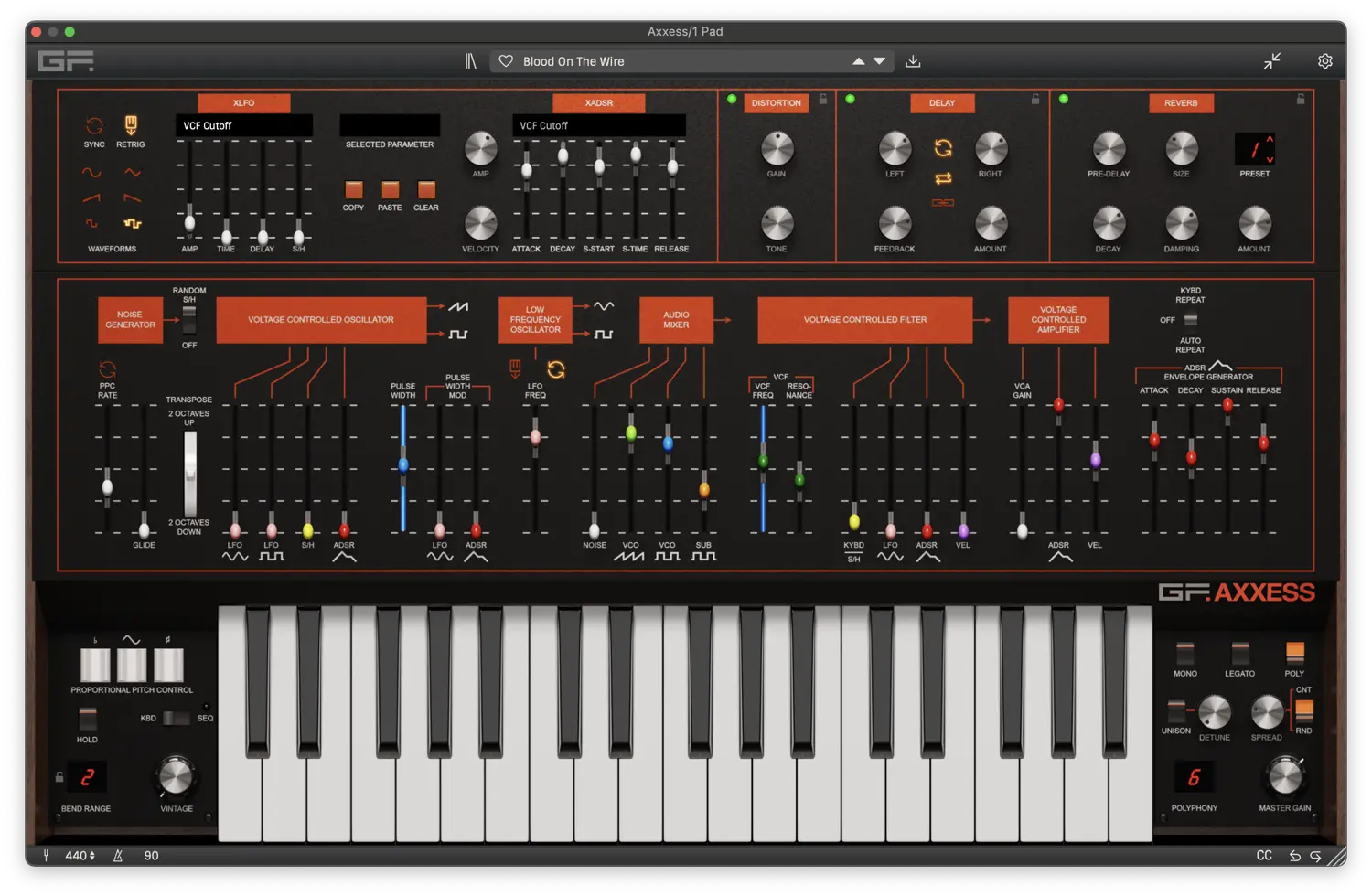
Let’s start the track with some chords. The Blood on the Wire factory preset has a noisy, lo-fi character that is inspiring and perfect for the vibe of the track. It has plenty of distortion and uses LFO modulation to create unsteady pitch vibrato.
I recorded an eight-bar loop cycling between two chords: Csus2 to D♭maj7. These chords are a semitone apart and don’t belong to the same key, so they create a chromatic shift that feels unresolved every time the loop repeats. The progression is simple, only two chords, but they create an uneasy feel.
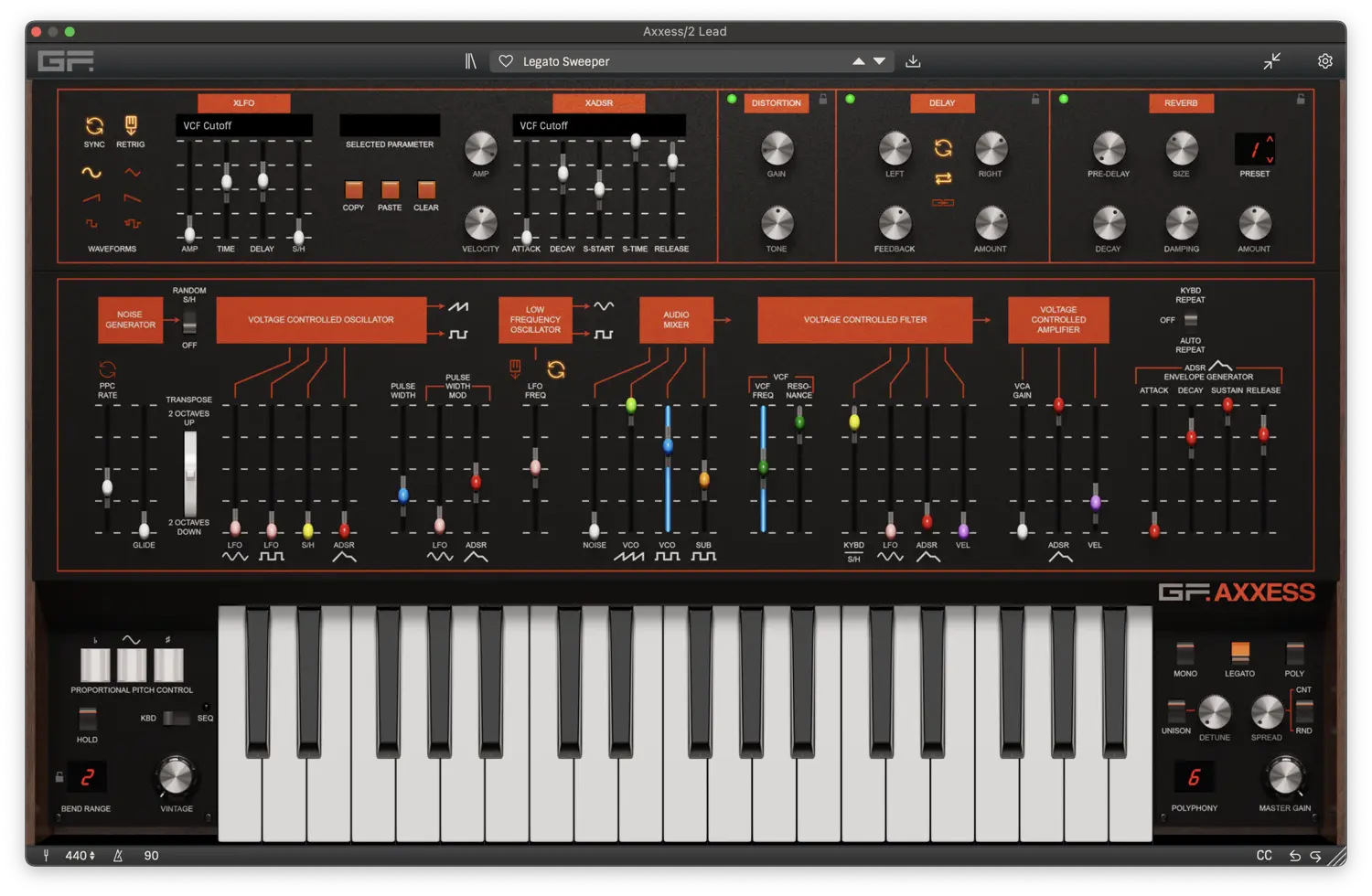
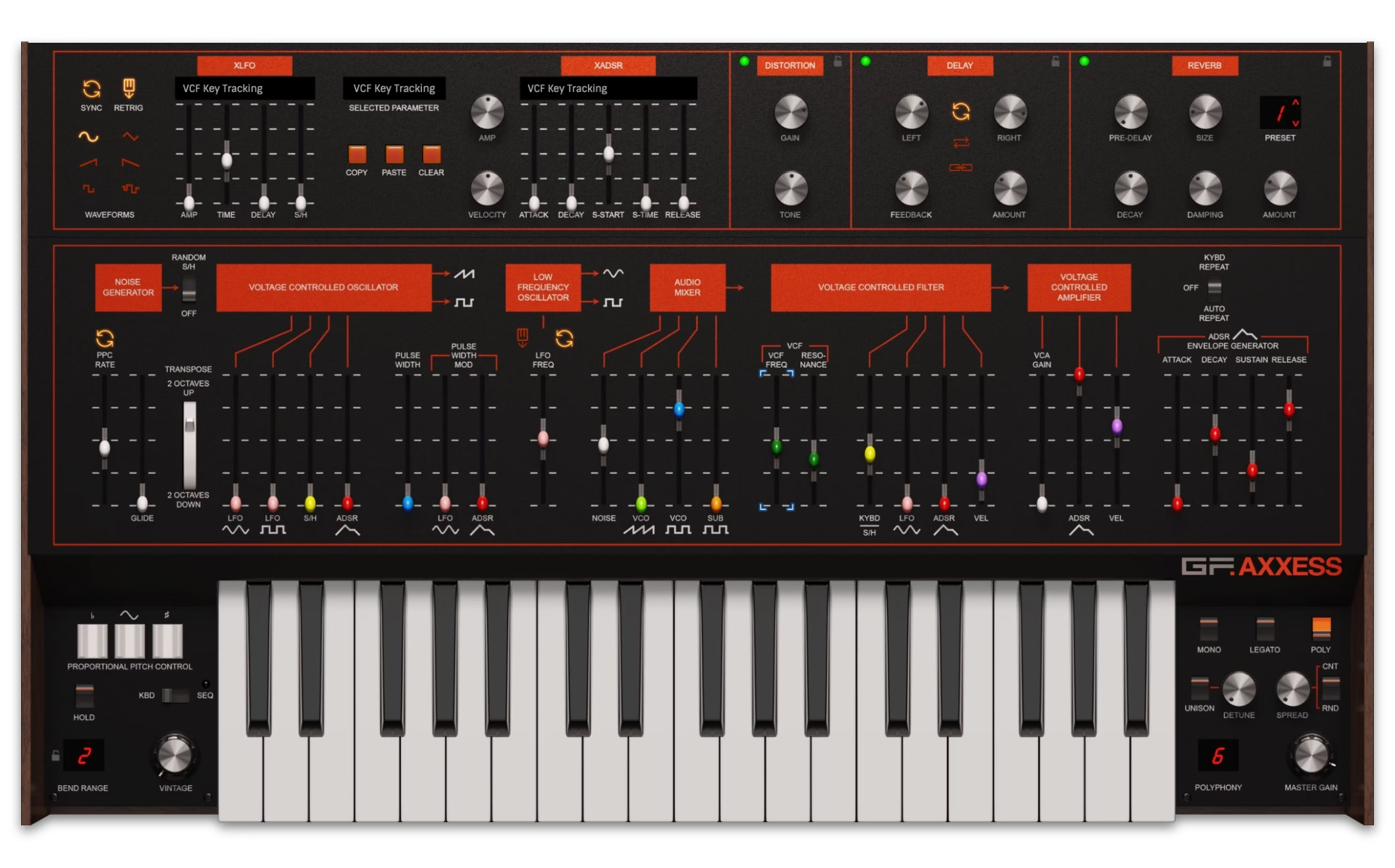
The only tweaks I made to the preset were turning up the distortion gain to 12 o’clock and increasing the delay time slightly to 1/2 beat. These settings are found in the extended panel at the top; if you can’t see this you can expand the interface with the arrow button at the top-right.
Bass and Drums
A lot of hip-hop and downtempo electronic music is built around sampled drum breaks lifted from old records, and that approach creates a different feel compared to a sequenced drum machine.
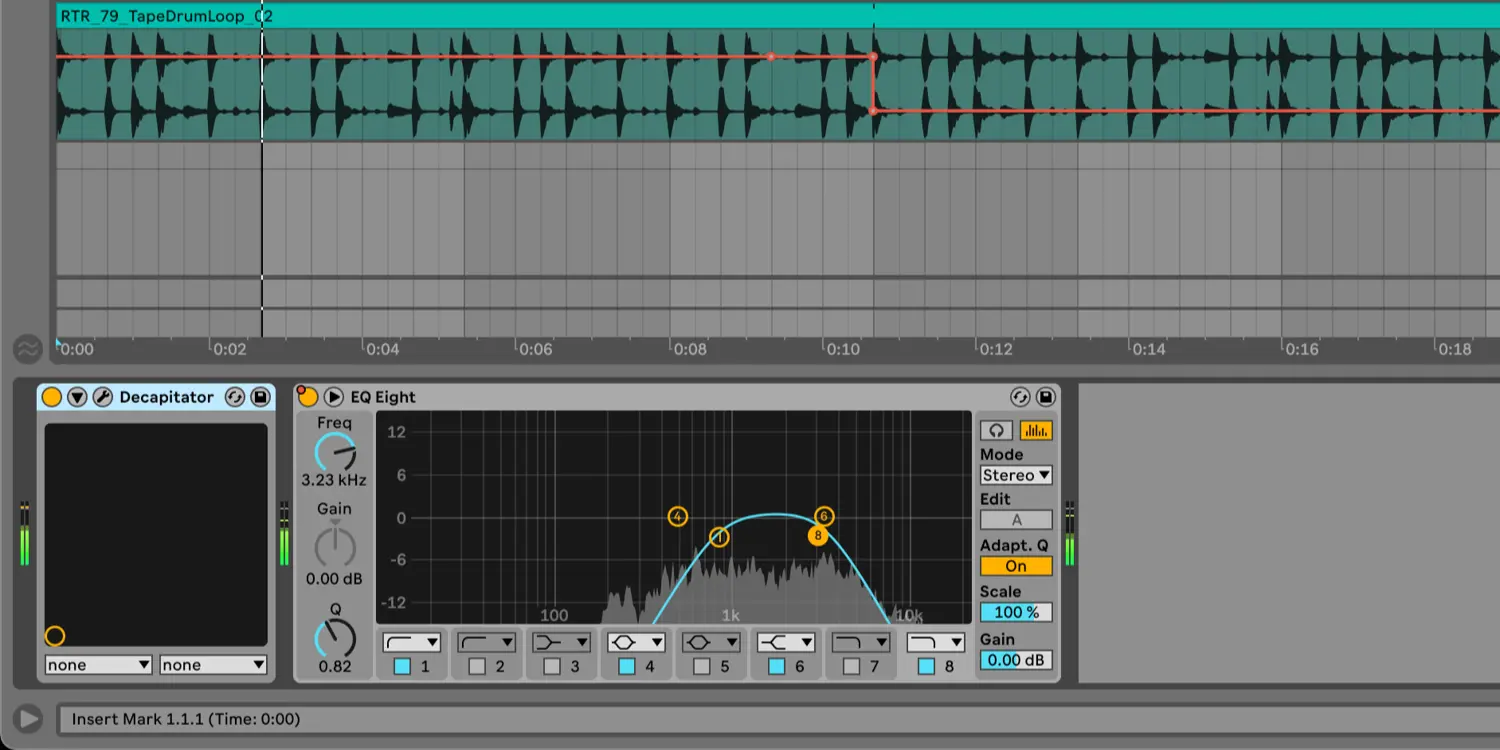
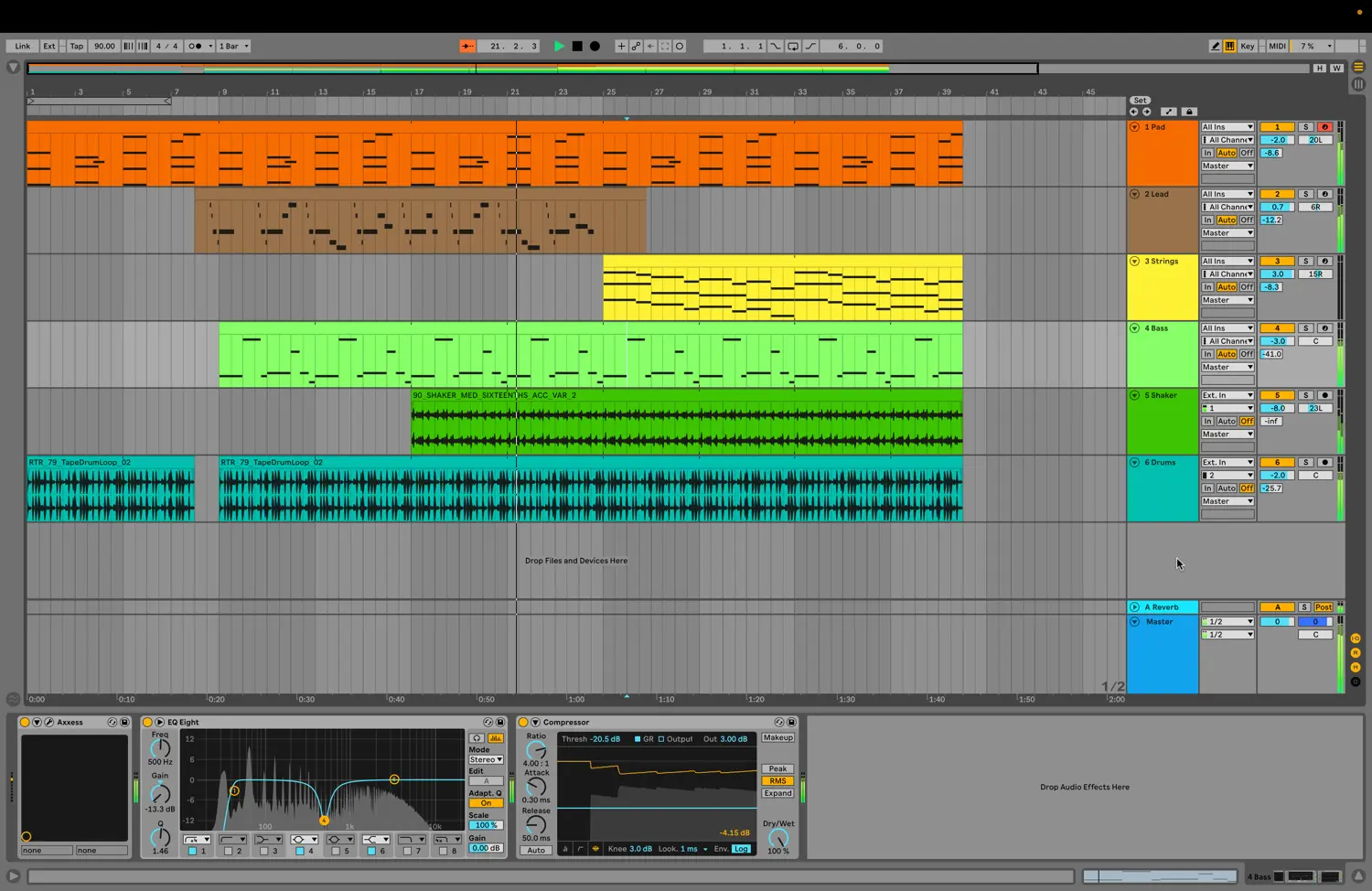
For this track, I used a breakbeat drum loop from the Reel-to-Reel Vintage Lofi sample pack by Black Octopus. I pushed it through Soundtoys Decapitator’s Drum Fattener preset to make it sound crunchier, and also filtered the drums with a band-pass filter for the first eight bars to create an introduction.
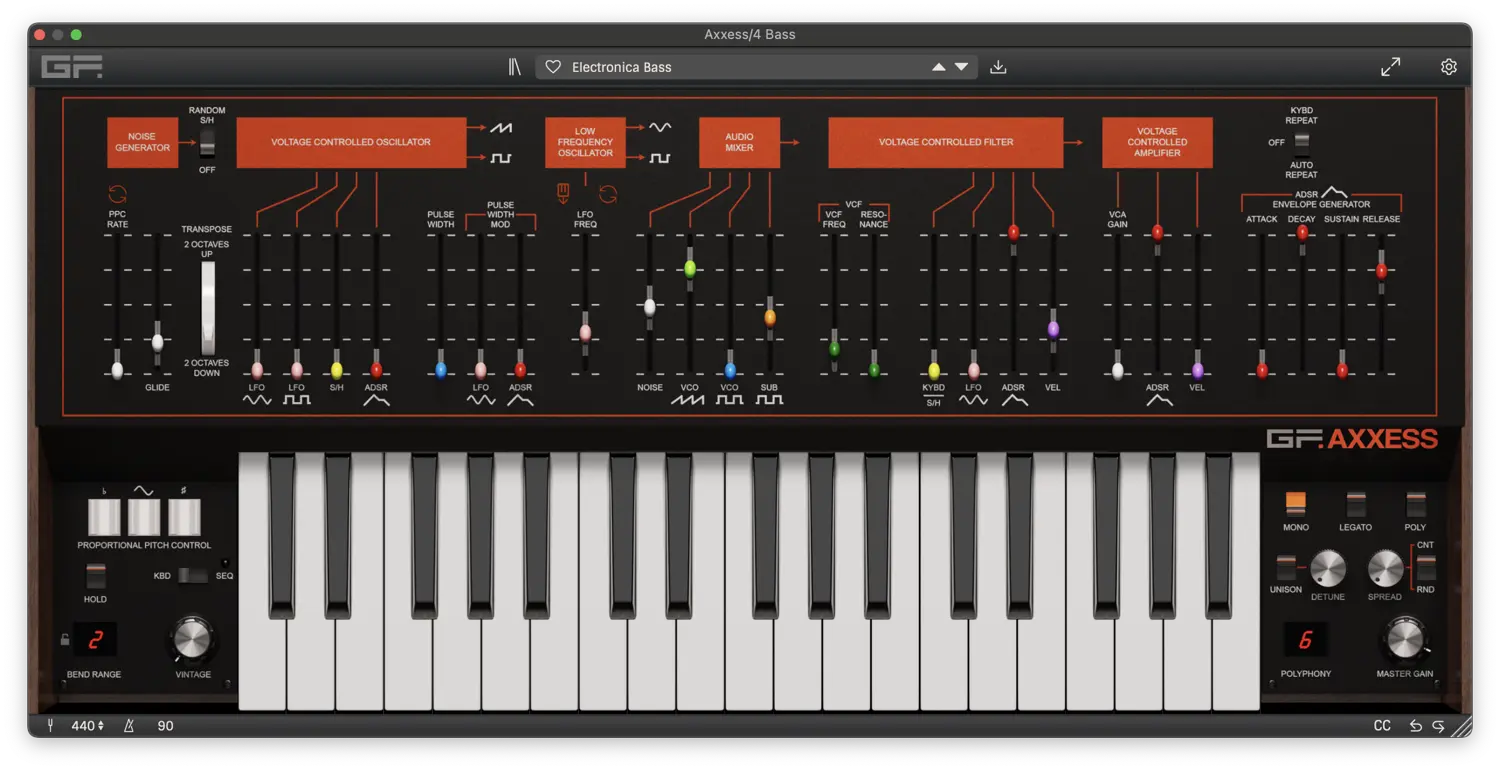
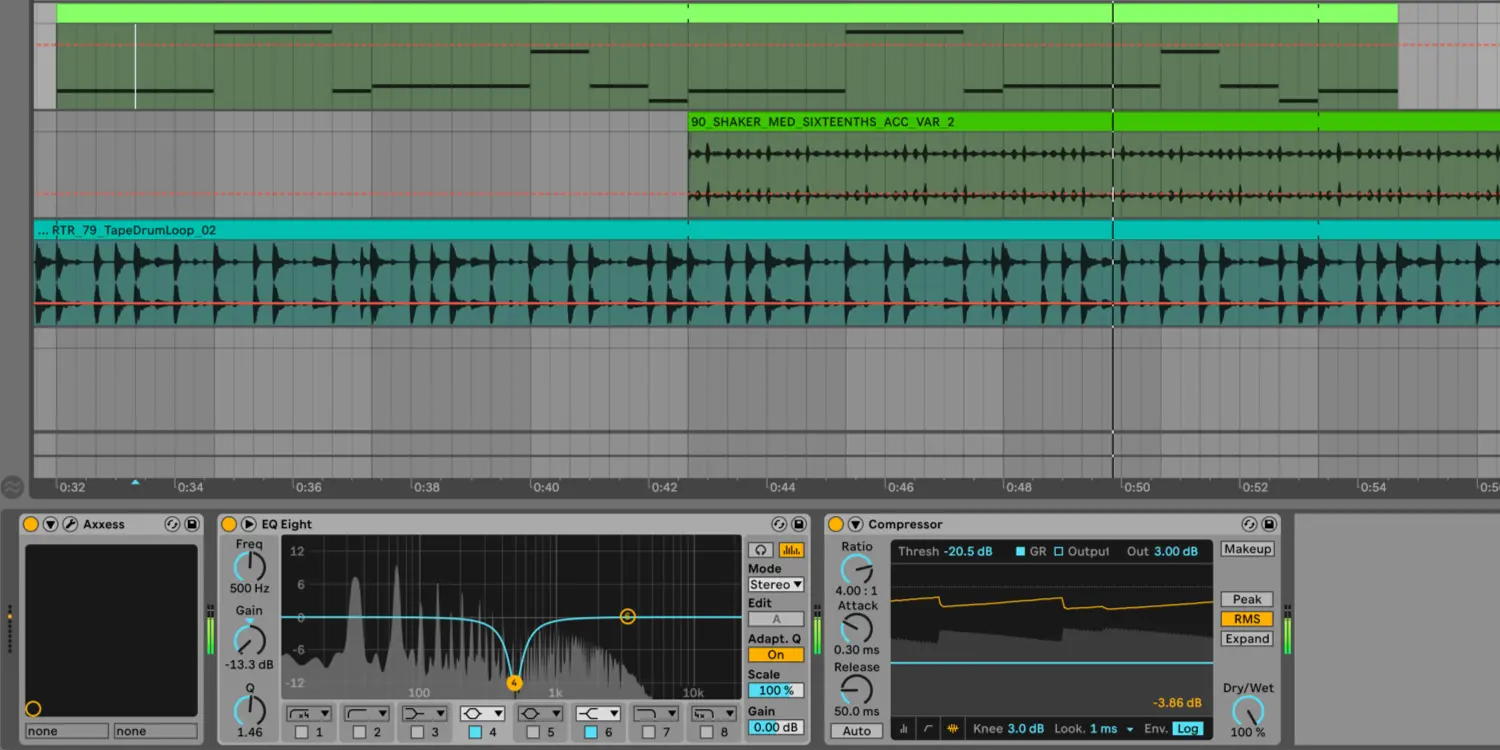
Next, I added a bassline using the Electronica Bass preset. The bassline mostly just follows the chord root notes, C and D♭, however I added a few passing notes between the chords to help add some momentum to the groove.
Bass sounds almost always need a bit of EQ to sit properly in a mix, and all that the track needed was a fairly aggressive midrange cut. I used Ableton Live’s EQ Eight device to remove around 13 dB at roughly 500 Hz, which is a range that often sounds boxy or nasal on synth basses. This cut makes the low end feel cleaner and gives more space to the chords and melodic elements.
Pentatonic Lead
For the lead sound, I used the Legato Sweeper preset, which is a gliding synth sound with a slow, woozy vibrato. It’s a bright sound that sits well in the mix, above the chords and bass.
Writing a melody over the chromatic chord progression played by the lo-fi pad sound can be tricky, as some notes will work over one chord but clash badly over the other. For example, a D natural sits comfortably over the Csus2, but sounds wrong against the D♭maj7.
One of the best approaches is to keep the melody simple. For this track, I mostly limited it to four notes: F, G, B♭, and C, which avoids the most problematic notes and works over both chords. I then played a short, repeating phrase that acts like a melodic hook, letting the chords underneath do most of the harmonic work.
Rhythmic Pad Outro
To finish the track, I added a rhythmic pad using the Sea Organ preset. This one has a built-in sample & hold modulation on the filter, creating a sync’d, sequencer-like movement across the sustained notes.
I played a short, chromatically descending line to complement the Csus2–D♭maj7 progression, and used it as a fadeout section for the track. The repeating filter motion adds motion without introducing more rhythm parts.
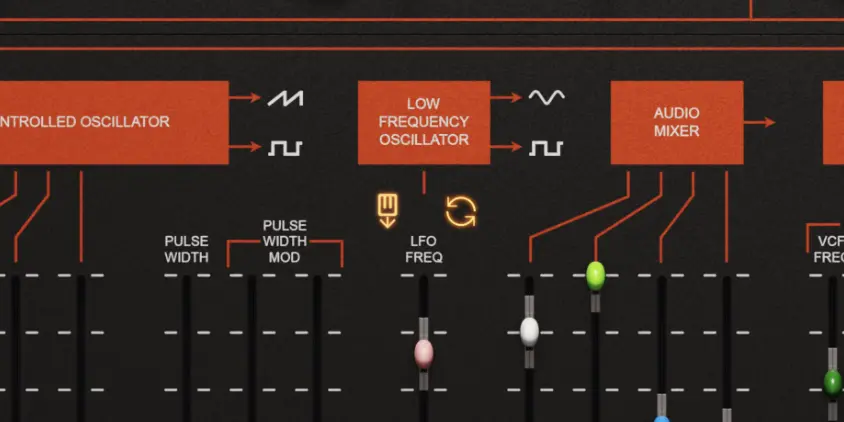
The LFO is already synced to DAW tempo, so the LFO movement will play in time with our track, however it isn’t set to retrigger with new notes, so it can start out of sync with the track. We can easily adjust this by activating the LFO Retrigger button, which is a keyboard icon, under the Low Frequency Oscillator section.
For final touches, I slightly panned all the tracks apart from the bass and drums left-and-right, and added a shaker track to add some extra energy mid-way through the lead section. I added some additional reverb in a Send track using Valhalla VintageVerb to help glue the tracks together, but apart from that, all distortion and lo-fi character comes from Axxess.
Axxess
Legal Notice
All trademarks, service marks and company names are the property of their respective owners. ARP is a registered trademark of Korg Inc.